Our rail experience spans both consulting and in-house roles. Several of our team members have worked in human factors and rail safety roles within a large Australian passenger train operation.

In these roles, our team has:

  • Provided human factors integration support to major engineering design projects
  • Developed and delivered non-technical skills training for rail operators’ safety-critical workers
  • Developed technical rollingstock conversion courses for a manufacturer
  • Supported the integration of human factors into the safety management system of a start-up rail operation
  • Supported safety investigations, and helped a passenger train operator to build internal safety investigation capability

Our Managing Director was also instrumental in the development of Confidential Observations of Rail Safety (CORS), the first rail adaptation of the aviation Line Operations Safety Audit (LOSA).

Rail Case Studies

Rollingstock

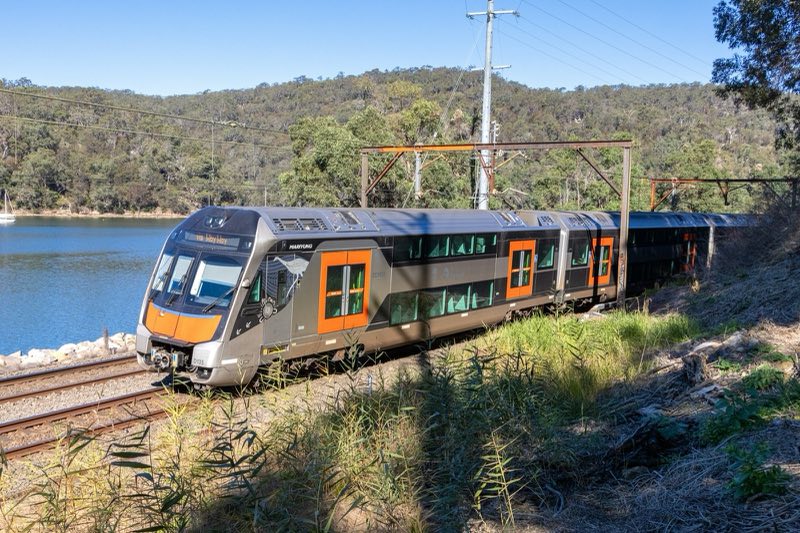
Operational readiness support for new rollingstock

SystemiQ supported a rollingstock manufacturer by completing risk-based training needs analyses (RBTNAs) and developing conversion courses for all operational roles interfacing with a new rollingstock fleet.

The RBTNAs identified and prioritised training needs by understanding the tasks performed within each role, the systems or tools used to perform them, and the context in which they would be performed.

Conversion courses were designed for a range of roles, including traincrew, station staff, customer service, maintenance, control, cleaners, emergency response and security personnel, and covered both technical and non-technical skills. The complete training package was based on adult learning principles and consisted of interactive, engaging courses with practical exercises, supported by facilitation guides and assessment materials. SystemiQ also trained the operator’s facilitators to deliver the new package.

Outcome: a complete conversion training suite for every operational role, aligned with national vocational training requirements and delivered by the operator’s own trainers. When the rollingstock design later changed, the client engaged SystemiQ again to update the training to match.
Transport technology and accessibility

Human factors and accessibility support for a new transport ticketing system

SystemiQ provided human factors and accessibility support for the introduction of a new transport ticketing system. This included human factors assessments and human-centred design support for ticketing devices (rail, bus and ferry), staff and customer web portals, and mobile applications. Our work included:

  • Conducting human factors reviews of the system design, and engaging with system users to understand and incorporate their needs in the design process
  • Contributing to the identification and management of human factors and accessibility risks and issues, including supporting updates to the system design and, in some cases, to manufacturer and operator procedures and training
  • Managing the activities to achieve and verify compliance with relevant human factors standards and requirements, and with relevant sections of accessibility standards, including the Disability Standards for Accessible Public Transport (DSAPT), AS 1428, AS EN 301 549 and the Web Content Accessibility Guidelines (WCAG) 2.1
  • Documenting the outcomes of all human factors and accessibility work as part of the systems engineering process

Outcome: our recommendations were adopted, leading to systemic improvements in human factors and accessibility. Compliance was verified and documented for each part of the system, including accessibility-compliant installation guidelines for the ticketing devices.

Passenger rail operations

Non-technical skills training for rail industry trainers

SystemiQ has extensive experience in developing and delivering non-technical skills training programs for safety-critical roles in the rail, aviation, energy and banking industries.

For a large suburban passenger rail operation, we developed a non-technical skills and threat and error management (TEM) program for drivers and signallers. A brief assessment of the organisation’s needs informed a bespoke, interactive package with operationally relevant examples.

As well as preparing all course materials and facilitator guidance, we ran train-the-trainer courses for the in-house rail trainers, building their capability in human factors, TEM and facilitation. Participants received the courses very well, because of their interactivity and relevance to everyday operations.

Outcome: the operator’s own trainers deliver the program, so the capability stays in-house.

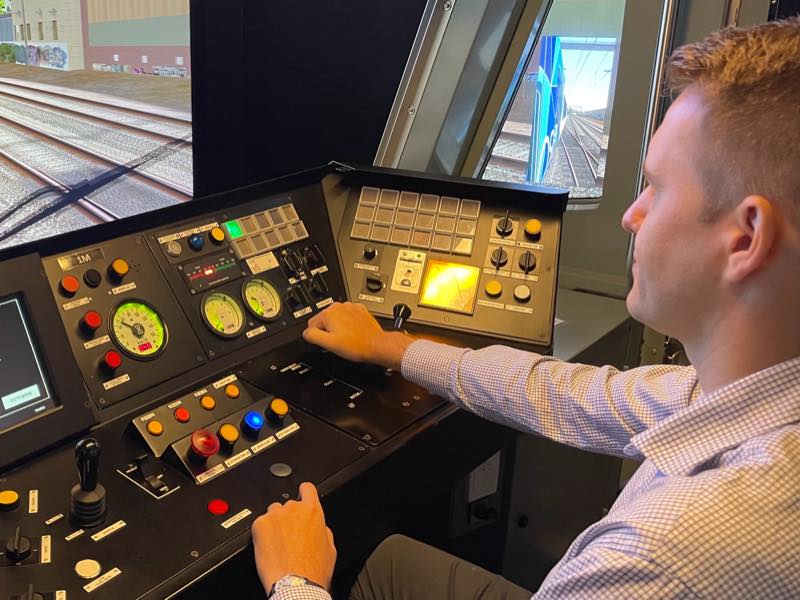
Ben Austin, Human Factors Consultant, at the controls of a train driving simulator

Train control and signalling

Operational readiness for ETCS Level 2

SystemiQ supported a major passenger rail operator’s operational readiness for European Train Control System (ETCS) Level 2. The change brings in-cab signalling, removes lineside signals, and introduces new interfaces in the driver’s cab and at train controllers’ workstations. Our team assessed how these changes would affect the people operating the network. This included:

  • Task analyses for drivers and train controllers, drawing on engineering and supplier documentation, observations at a test laboratory and on simulators fitted with the new interfaces, process workshops with train crew, and engagement with technical and operational subject matter experts
  • A review of research and safety data on driver workload with conventional lineside signalling compared with ETCS Level 2, and analysis of ETCS-related incident investigation reports for the project’s early human factors analysis
  • Workload and human error analyses for drivers and train controllers, with suggestions to mitigate the issues identified
  • Risk-based training needs analyses for drivers, guards, and train control and signalling roles, covering technical and non-technical skills such as dividing attention between the track ahead (heads-up driving) and the in-cab display (heads-down driving)

Train control

Train controller workload during ETCS Level 2 commissioning

SystemiQ evaluated how degraded operational states affect train controllers’ workload in a European Train Control System (ETCS) Level 2 commissioning environment. The study involved:

  • A review of the research literature
  • Interviews with train controllers
  • An observational study, with statistical modelling of the effects of different operational factors on controller workload

Outcome: the study identified the factors that drive controller workload, enabling the organisation to assess the impacts of past and future commissioning more effectively from a human factors perspective.

Contact SystemiQ

Contact us to discuss your rail project’s human factors integration needs.

Prefer to phone or email? See our Contact us page.

We use your details only to respond to your enquiry. See our privacy policy.